
Moscow's Silence and Mounting Pressure Following Armenia's New Parliamentary Mandate
Two weeks after the inaugural session of the Armenian National Assembly, Prime Minister Nikol Pashinyan has secured a new mandate, yet congratulations from Moscow remain noticeably absent. Instead, Armenia is navigating mounting Russian economic restrictions and increasing pressure to make a definitive foreign policy choice.
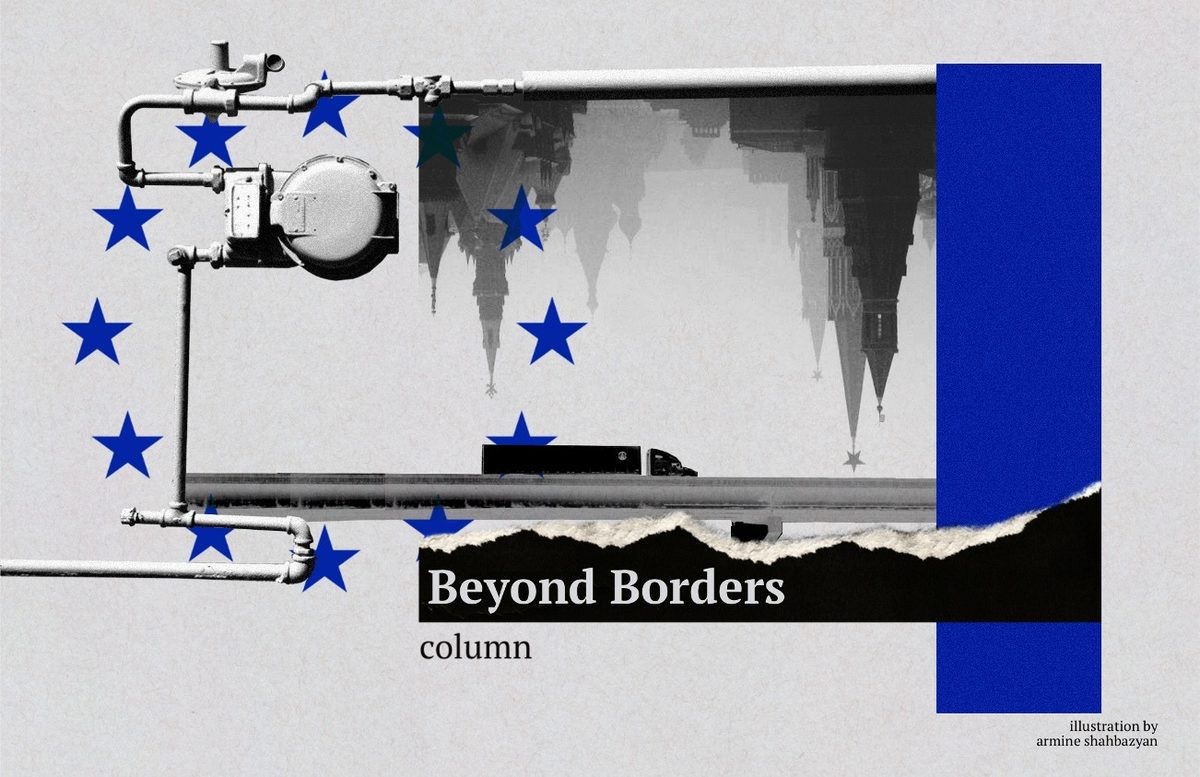
An analysis in the "Beyond Borders" column on evnreport.com by Olesya explores recent developments in the South Caucasus region, specifically focusing on Georgia, Armenia, and Azerbaijan. According to the publication, two weeks after the new National Assembly began its work, Nikol Pashinyan reaffirmed his mandate, but Moscow offered no official congratulations. This diplomatic silence coincides with tangible repercussions: export restrictions on Armenian manufacturers and looming uncertainty over the price of discounted Russian gas as winter approaches.
Economic and Geopolitical Pressures
Russia has publicly demanded that Armenia hold an immediate referendum to choose between the European Union and the Russian-led Eurasian Economic Union (EEU). Yerevan, however, maintains that since it has not officially applied for EU membership, such a referendum is not currently on the agenda. Armenian officials argue that forcing this choice would only deepen internal polarization, drag the country into the broader geopolitical conflict between the West and Russia, and derail ongoing peace negotiations with neighboring Azerbaijan and Turkey.

The Roots of Mistrust: Flashback to 2018
The current crisis has roots stretching back to 2018, when Nikol Pashinyan came to power through mass democratic protests. The Kremlin has historically viewed leaders who emerge from popular uprisings with deep suspicion. Highlighting Armenia's perceived dependency at the time, one Russian official reportedly remarked,
"Where else could Armenia go from our submarine?" (evnreport.com).Despite this skepticism, Yerevan consistently attempted to demonstrate its loyalty, particularly in the aftermath of the 2020 war, by permitting an expanded presence of Russian border guards in the strategic southern region of Syunik and within its broader security framework.
Security Shifts Post-2021
The security dynamics shifted significantly in 2021 when sections of the strategic Goris-Kapan highway fell under Azerbaijani control and were subsequently blockaded, despite the presence of Russian peacekeepers. Similar ceasefire violations were recorded in Artsakh. These security failures prompted Pashinyan to initiate direct negotiations with Azerbaijani President Ilham Aliyev in Brussels later that same year. During a pre-election meeting at the Kremlin, Russian President Vladimir Putin raised concerns about Armenia's ties with the European Union, to which Pashinyan responded by emphasizing his commitment to democratic principles. Ultimately, Moscow views the South Caucasus as a geopolitical battleground against the United States and the EU—a strategic struggle whose heavy consequences Armenia previously faced in 2013.
This article was generated automatically using AI based on reporting from established news sources. All sources are listed below.
The essentials, no spam.